Did you know that the City of Sedona recently implemented development impact fee increases of up to 139 percent, potentially adding over $17,000 to your budget before the first shovel hits the dirt? For many visionaries, the dream of a custom sanctuary among the red rocks is often met with the harsh reality of the Sedona Tax. You've likely realized that building in this unique landscape requires more than just a talented architect. It demands a mastery of the invisible expenses that hide within the topography and local regulations.
We understand that you expect a seamless journey from lot purchase to move-in without sacrificing the premium quality your lifestyle demands. By prioritizing a strategy for avoiding hidden costs when building a home in Sedona, you can secure a predictable budget and avoid the common pitfalls of unpredictable site prep or sudden utility connection fees. This 2026 ultimate checklist serves as your professional guide to mastering the complexities of the local market. We'll break down the specific expenses involved in geotechnical reports, the latest Yavapai County fee schedules, and the essential steps to ensure your project remains a benchmark of quiet luxury.
Pre-Construction Realities: The Hidden Costs of Sedona Terrain
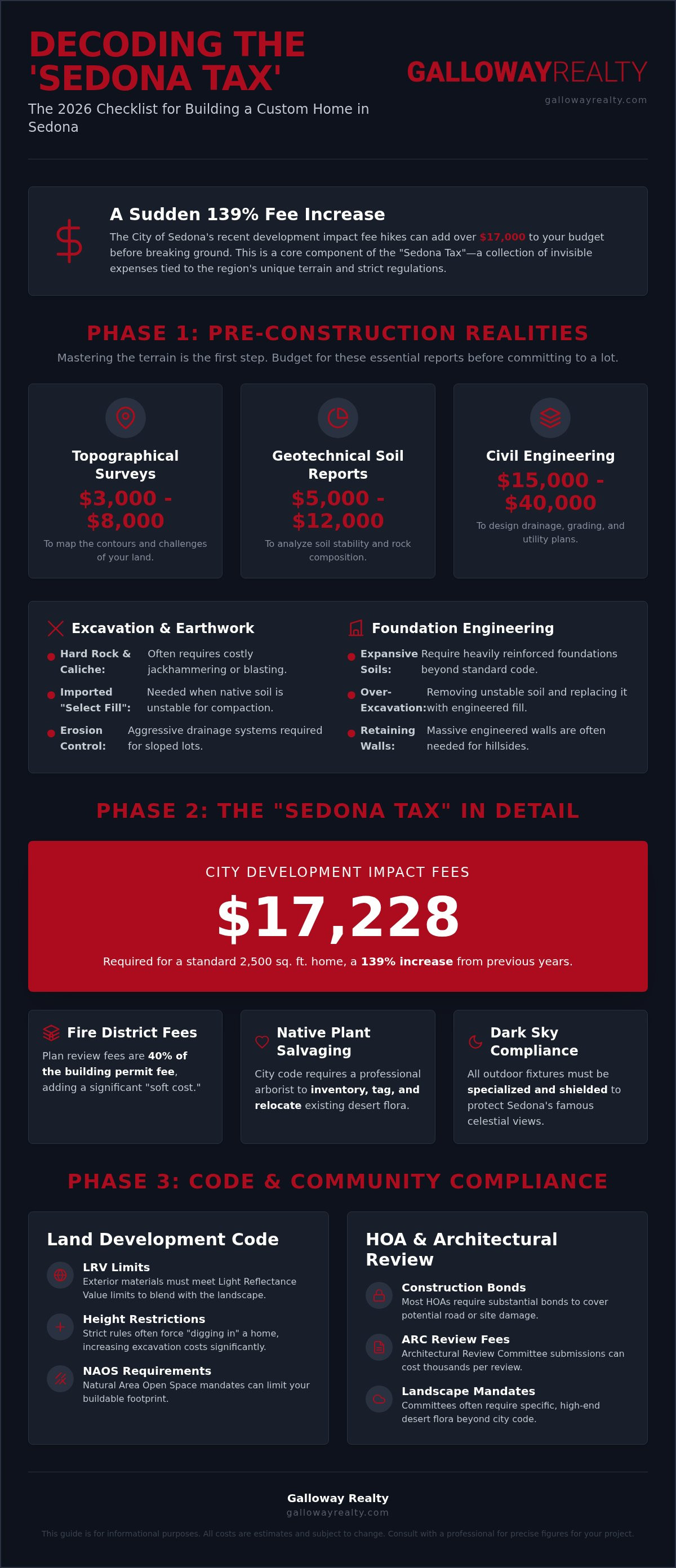
The allure of a discounted lot in the red rocks is often a siren song for the unprepared. In Sedona, "cheap" land usually signals complex topographical challenges that can quickly balloon your budget. A lot priced significantly below market value often requires double that savings in additional site preparation. Mastering the terrain is the primary pillar of avoiding hidden costs when building a home in Sedona. This process requires a sophisticated approach to understanding cost estimates before you commit to a purchase. You must budget for essential professional services early, including topographical surveys ($3,000 to $8,000), geotechnical soil reports ($5,000 to $12,000), and civil engineering ($15,000 to $40,000). These aren't optional luxuries; they're the foundation of a predictable build.
To better understand the financial nuances of this region, watch this helpful video:
Excavation and Earthwork Surprises
Sedona’s geology is uncompromising. Excavation often reveals caliche, a concrete-like layer of calcium carbonate, or solid red rock that defies standard equipment. When these materials are present, you'll need specialized jackhammering or even controlled blasting to create a level building pad. If the native soil is too rocky or unstable for compaction, you must factor in the cost of importing "select fill" to ensure structural integrity. Additionally, sloped lots require aggressive drainage and erosion control systems to manage high-desert runoff. These requirements are strictly enforced to protect the local environment and your investment.
Foundation Engineering for High-Desert Soil
The Verde Valley is known for expansive soils that shift with moisture levels. These conditions require reinforced foundations that go far beyond standard building codes. In many cases, a specialized custom home builder will recommend over-excavation. This involves removing several feet of unstable soil and replacing it with engineered fill to reach stable bedrock. While standard stem walls work for flat ground, Sedona’s iconic hillsides often necessitate massive engineered retaining walls. These structures are vital for both aesthetic integration and long-term stability. They represent a significant portion of the pre-construction budget that many owners overlook until the design phase is well underway.
The 'Sedona Tax': Regulatory and Compliance Fees
Building in the Red Rock Country is an exercise in regulatory precision. What locals often call the "Sedona Tax" isn't a single line item. Instead, it's a sophisticated collection of municipal impact fees, fire district assessments, and environmental mandates. For a standard 2,500 square foot home, the City of Sedona now requires development impact fees of $17,228. This represents a 132 percent increase from previous years, covering essential infrastructure like roads and parks. When you factor in the Sedona Fire District plan review fees, which are 40 percent of the building permit fee, the "soft costs" begin to rival the price of a luxury kitchen before construction begins. Mastering these figures is the first step in avoiding hidden costs when building a home in Sedona.
The complexity extends to the very soil and sky. You must account for native plant salvaging and restoration mandates. City code requires a specialized inventory of existing desert flora, often necessitating a professional arborist to tag and relocate specimens before site clearing starts. Furthermore, every outdoor fixture must meet strict Dark Sky compliance standards to preserve our famous celestial views. This requires specialized shielded lighting and precise electrical placement that standard builders often overlook. Reviewing the official Sedona building permit requirements will provide a baseline for these technical expectations.
Navigating the Land Development Code
Sedona enforces a rigorous aesthetic standard. All exterior materials must adhere to Light Reflectance Value (LRV) limits, ensuring homes blend into the natural landscape rather than reflecting the desert sun. Height restrictions are equally firm. To preserve sightlines, you may be forced to "dig in" to your lot, a process that significantly increases excavation costs. Additionally, Natural Area Open Space (NAOS) requirements often mandate that a percentage of your lot remain entirely untouched. This limits your buildable footprint and requires creative architectural solutions to maximize luxury within a restricted space.
HOA and CC&R Compliance Costs
Gated communities like Sky Ridge Estates or Seven Canyons involve an additional layer of oversight. Most Sedona HOAs require substantial construction bonds to cover potential road damage or site cleanup. Design review fees for Architectural Review Committees (ARC) can reach several thousand dollars per submission. These committees also mandate specific landscaping themes that go beyond city code, often requiring high-end desert flora that must be sourced from specialized nurseries. If you find these layers of bureaucracy daunting, consulting with a local expert can help you navigate these requirements with artisanal precision.
Infrastructure and Utility Connection Logistics
Infrastructure in the high desert is a complex puzzle of engineering and logistics. While the red rock vistas provide a stunning backdrop, they present significant hurdles for essential services. Securing reliable utility connections is a critical component of avoiding hidden costs when building a home in Sedona. You can't assume that a vacant lot is "ready to build" simply because it sits adjacent to a developed property. True due diligence requires a technical evaluation of the distance to the nearest main lines and the geological composition of the path between them.
Water and Waste Management
Connecting to the local water supply involves more than a simple valve turn. In July 2025, the Arizona Corporation Commission approved a 45 percent rate increase for the Arizona Water Company in Sedona to fund new infrastructure. New owners must expect significant impact fees for water meter installations and potential main line extensions. If your dream home sits on an elevated ridge, you'll likely need to budget for booster pumps to maintain adequate water pressure. Waste management presents its own set of challenges. While municipal sewer is the gold standard, many premier lots require engineered "Alternative" septic systems. These systems are designed specifically for rocky terrain where traditional leach fields are impossible. They require specialized installation and high-end components that standard systems don't utilize.
Power and Gas Infrastructure
Bringing power to a remote canyon lot is a premium endeavor. Arizona Public Service (APS) requires underground lines for most new Sedona construction to preserve the visual landscape. Trenching through solid rock or caliche to meet these requirements is an expensive variable that depends entirely on your site's geology. Rising 2026 construction material costs for conduit and specialized wiring also impact these initial connection budgets.
Heating your home requires a strategic choice between burying a propane tank or extending a natural gas line. Natural gas extensions can be prohibitively expensive if the main line isn't nearby. Don't overlook high-speed internet infrastructure. Many canyon areas lack fiber-optic access, requiring significant investment in private line extensions or specialized hardware to ensure connectivity. Utilizing Galloway Realty's custom home building expertise ensures these site-specific utility plans are evaluated during the due diligence phase. This proactive approach is the only way to maintain a predictable budget in a market where infrastructure isn't guaranteed.
Material and Labor Realities in the 2026 Market
Building in a destination market like Sedona carries a distinct economic profile. You aren't just paying for lumber and nails; you're investing in a specialized labor pool that understands the nuances of high-desert construction. This "Sedona Premium" is a significant factor in avoiding hidden costs when building a home in Sedona. By mid-2026, Arizona is projected to have over 195,000 vacant construction positions according to industry forecasts. This scarcity drives up wages and often requires bringing in elite trades from Phoenix or Flagstaff. You must account for travel stipends and per diems for these specialists to ensure your project receives the artisanal precision it deserves.
A 15 to 20 percent contingency fund is no longer a suggestion; it's a structural necessity. With Phoenix metro construction costs rising by 7.05 percent year-over-year in early 2026, price protection is paramount. Steel and copper have seen significant jumps in valuation, impacting everything from structural framing to high-end plumbing fixtures. Maintaining a robust buffer allows you to absorb these fluctuations without compromising on the luxury finishes that define a custom home.
The Cost of Luxury Finishes
Sedona’s aesthetic demands authentic materials like flagstone and heavy timber. These local staples are subject to high price volatility due to supply chain constraints. Custom-milled cabinetry and floor-to-ceiling high-performance glass also carry substantial lead-time costs. Choosing "builder grade" materials in the high desert is a false economy. The intense UV exposure and temperature swings will degrade inferior products within years. Premium custom materials are engineered for this environment, offering a superior lifespan that justifies the initial investment.
Labor Shortages and Scheduling Delays
Delays in construction lead to ballooning carrying costs, particularly interest on construction loans. This makes the choice of contract type critical. While "cost-plus" models offer transparency, "fixed-price" contracts can provide more stability in a volatile market. The most effective hedge against delays is a builder with deep-rooted local subcontractor relationships. These connections ensure your project remains a priority, keeping the momentum moving forward when resources are tight.
Secure your build's future by partnering with an expert who manages every variable of the 2026 market with polished reliability.
The Galloway Advantage: Eliminating Surprises in Sedona
The path to a Red Rock masterpiece is paved with technical nuances that separate a successful build from a financial burden. Most homeowners hire a real estate agent to find land and a builder to construct the home, but this fragmented approach often leaves the client vulnerable to the gaps between transaction and creation. Our integrated Builder-Broker model is the definitive solution for avoiding hidden costs when building a home in Sedona. We evaluate a lot's "buildability" through a dual lens, ensuring that the purchase price reflects the true cost of the terrain, regulation, and infrastructure discussed in previous sections.
For those seeking a more streamlined path, Sky Ridge Estates offers exclusive, shovel-ready luxury opportunities. These home sites have been meticulously vetted to eliminate the surprises that plague undeveloped canyon lots. By choosing a development managed by experts who understand the intersection of luxury real estate and custom construction, you align your vision with long-term property investment goals from the very first day. We provide a "one-stop-shop" experience that transforms a complex process into a state of effortless progression.
Pre-Purchase Feasibility Studies
We don't wait for the design phase to identify red flags. Our team conducts exhaustive feasibility studies before the deal closes, analyzing sub-surface rock conditions and utility access that others might overlook. This synergy is essential when deciding between buying vs. building in Sedona. By integrating real estate acquisition with construction planning, we prevent the dreaded change orders that often derail custom budgets. You receive a transparent roadmap that accounts for every City of Sedona impact fee and geological hurdle before you commit to the purchase.
A Legacy of Excellence
Our boutique firm prioritizes quality over volume, offering a level of individual accountability that mass-market providers cannot match. Decades of local experience allow us to navigate the City of Sedona's permitting process with unmatched efficiency. We act as your single point of contact, managing the "art" of the industry from site prep to final finishes. This master-level oversight provides the polished reliability required for a high-net-worth investment. We invite you to contact Galloway Realty for a comprehensive cost consultation. Let us transform the complexities of the 2026 market into a seamless journey toward your custom sanctuary.
Secure Your Red Rock Vision with Professional Precision
Building a home among the red rocks is a high-stakes endeavor that requires more than just an eye for design; it demands a technical mastery of the geological and regulatory landscape. You've seen that success depends on foresight, from navigating the 132 percent increase in City of Sedona impact fees to managing the complexities of red rock excavation. By prioritizing a strategy for avoiding hidden costs when building a home in Sedona , you protect your investment and ensure your custom sanctuary remains a source of prestige rather than stress.
Our firm brings unmatched expertise to every project, having sold over 2,000 homes in the Sedona area. As specialists in premier developments like Sky Ridge Estates, our integrated real estate and construction model eliminates the gaps that often lead to budget overruns. We provide a single point of accountability, managing every detail from initial lot feasibility to the final artisanal finishes. Your vision deserves the gold standard of local expertise.
Schedule a Consultation with Sedona's Premier Custom Home Builder today to begin your journey with polished reliability. Let's build your extraordinary future together.
Frequently Asked Questions
How much should I set aside for a contingency fund when building in Sedona?
Set aside a contingency fund of 15 to 20 percent of your total construction budget. This buffer is essential for managing the volatile material prices and labor shortages characteristic of the 2026 market. A robust contingency ensures that unexpected shifts in the global supply chain don't force compromises on your high-end finishes or architectural vision. It provides the financial flexibility required to maintain project momentum despite market fluctuations.
Are impact fees the same for every lot in Sedona?
Development impact fees vary significantly based on your lot's specific jurisdiction. While the City of Sedona implemented substantial fee increases in early 2026, unincorporated Yavapai County repealed its development impact fees as of December 1, 2020. Understanding your lot's legal location is a primary step in avoiding hidden costs when building a home in Sedona . This distinction can save you tens of thousands of dollars in initial soft costs.
What is 'caliche' and why does it increase my building costs?
Caliche is a sedimentary layer of calcium carbonate that hardens into a concrete-like substance beneath the desert surface. This material often defies standard excavation equipment and requires specialized heavy machinery, such as hydraulic jackhammers or controlled blasting, to penetrate. These technical requirements add significant unbudgeted expenses to your site preparation phase if the condition isn't identified through early geotechnical testing and professional soil reports.
Can I avoid HOA fees by building outside of gated communities?
You can avoid HOA-specific fees and construction bonds by selecting a lot outside of a gated community, but city-wide regulations remain uncompromising. Even on independent lots, you must adhere to the City of Sedona Land Development Code, which includes strict Light Reflectance Value limits and native plant restoration mandates. These municipal requirements often carry costs similar to the aesthetic standards enforced by premium HOAs in the region.
How do Dark Sky regulations affect my outdoor lighting budget?
Sedona's Dark Sky ordinances require all outdoor lighting to be fully shielded and directed downward to prevent light pollution. These regulations necessitate specialized fixtures and precise electrical placement, which typically cost more than standard exterior lighting packages. Budgeting for these premium, compliant fixtures early prevents costly retrofitting during the final inspection phase and ensures your home meets the community's high environmental and aesthetic standards.
Is it cheaper to buy an existing home or build a new one in Sedona in 2026?
Buying an existing home is typically more cost-effective upfront than building a new custom residence in 2026. Custom construction in Sedona currently commands a 30 to 50 percent premium over the Phoenix metro area due to challenging terrain and labor scarcity. However, building allows for unmatched personalization and the integration of modern, energy-efficient systems. For many investors, the long-term value of a custom build justifies the initial premium.
What are 'soft costs' in the context of Sedona custom home building?
Soft costs refer to the essential non-tangible expenses required before and during construction, such as architectural fees, civil engineering reports, and municipal permits. In Sedona, these also include development impact fees, which for a 2,500 square foot home can exceed $17,000 as of 2026. These professional and regulatory fees are critical components of a comprehensive strategy for avoiding hidden costs when building a home in Sedona .
Do I need a special permit for removing native trees or cacti from my lot?
The City of Sedona requires a specialized permit and a native plant salvage plan before you can remove or relocate desert flora. Code mandates that specific species, such as saguaros and certain juniper trees, be professionally protected or replaced during the development process. Failing to account for the arborist fees and restoration costs associated with these permits can result in significant project delays and substantial municipal fines.