
Top Mistakes to Avoid When Building a Custom Home in Arizona: The 2026 Definitive Guide
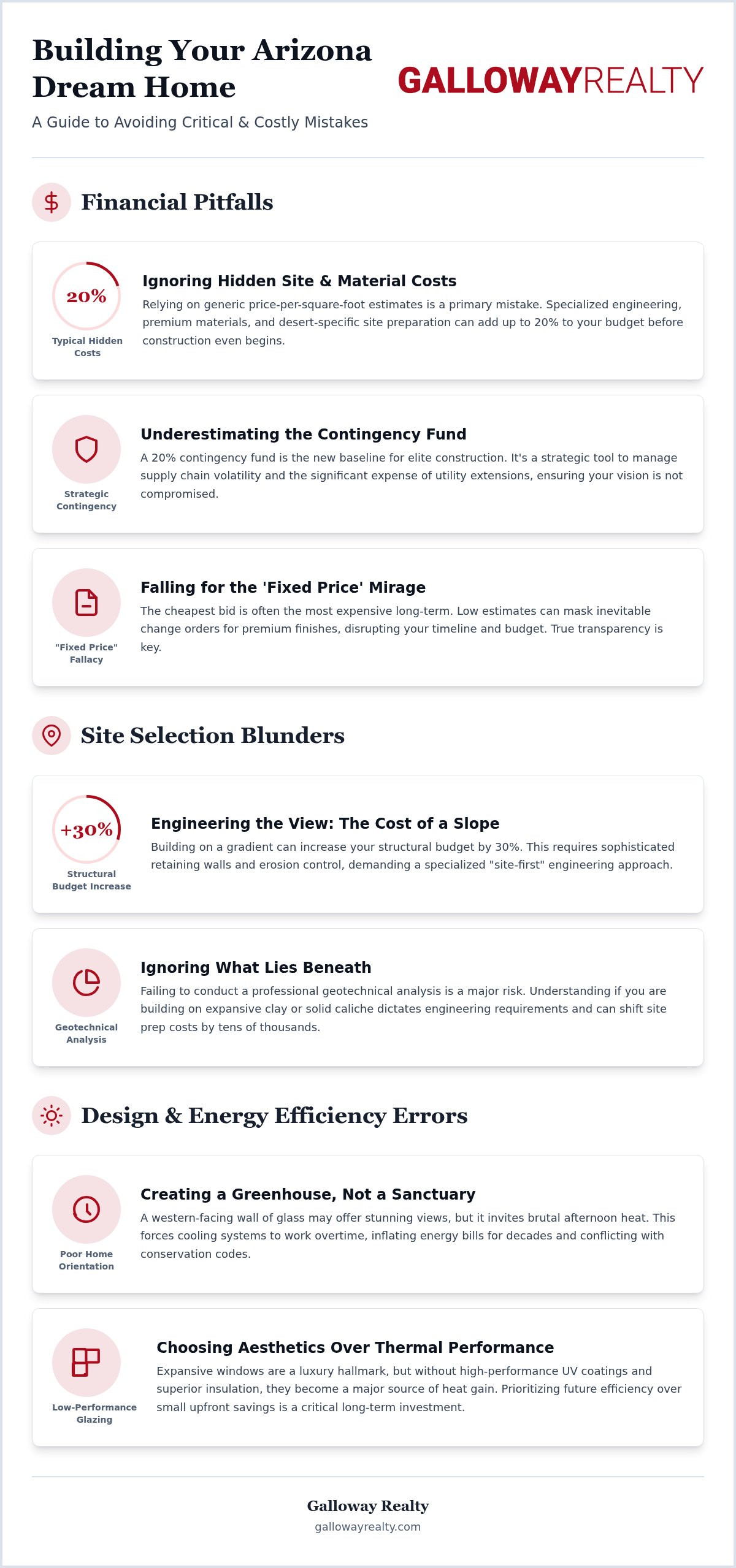
What if the most expensive element of your Arizona dream home isn't the premium finishes or the infinity pool, but the invisible site challenges hidden beneath the desert floor? You've likely spent months envisioning a sanctuary that blends seamless indoor-outdoor living with unmatched architectural precision. It's a significant investment of both capital and vision. However, many ambitious homeowners overlook the critical mistakes to avoid when building a custom home in Arizona, leading to hidden costs that can add up to 20 percent to your total budget before the first wall is even framed.
We understand that building in the desert is as much an art as it is a technical feat. This 2026 definitive guide provides an expert-led checklist to help you navigate the complexities of new building codes, rigid HOA hurdles, and the specialized engineering required for our state's unique geology. You'll learn how to maintain peak energy efficiency in extreme heat while mastering the "site-first" approach that separates elite builds from costly cautionary tales. From managing the "Silicon Desert" demand to navigating the latest wildfire resilience standards, we'll ensure your journey from initial transaction to physical creation remains as polished and effortless as the home itself.
Financial Pitfalls: Why 'Standard' Budgets Fail in the Arizona Luxury Market
Standard budgeting often collapses under the weight of Arizona's unique geographical demands. Relying on a generic price per square foot estimate is one of the primary mistakes to avoid when building a custom home in Arizona. This metric is a relic of mass-market development. It fails to account for the specialized engineering required for Sedona's iconic sloped lots or the premium for artisanal materials. In the 2026 market, luxury is defined by bespoke solutions that don't fit into a generic spreadsheet. High-net-worth investors must recognize that the "luxury tax" on premium finishes isn't just about the price of the stone; it's about the specialized labor required to install it with precision.
A 20 percent contingency is now the baseline for elite construction. While some firms might suggest a lower margin, that figure hasn't kept pace with the volatility of the 2026 supply chain or the rising costs of desert-specific site preparation. This fund acts as a strategic tool rather than just a safety net. It ensures your vision isn't compromised by unforeseen impact fees or the significant expense of utility extensions in remote desert enclaves. Proper planning requires a full-lifecycle view of the home construction process to avoid the friction of mid-project financial adjustments.
The Myth of the 'Fixed' Price
Fixed price contracts are often a mirage in the custom sector. Allowances for high-end fixtures frequently fall short of the actual costs for premium, specialized finishes chosen during the design phase. In 2026, the cheapest bid is almost always the most expensive choice in the long run. These low-entry estimates often mask inevitable change orders that disrupt both your timeline and your peace of mind. True boutique service provides transparency, ensuring that initial transactions reflect the actual cost of physical creation.
Overlooking Long-Term Operational Costs
Luxury is an investment in longevity. Choosing inferior insulation to save on upfront costs is a financial error that manifests in decades of inflated cooling bills. Arizona's extreme heat demands high-performance windows and climate-responsive architecture. Furthermore, smart home technology must be integrated during the initial build phase. Retrofitting these systems later is exponentially more expensive and invasive. We prioritize building for future efficiency, ensuring that your dream home remains a high-performing asset rather than a maintenance burden.
Site Selection Blunders: Ignoring the Unique Topography of Sedona and Beyond
Selecting a lot in Arizona based solely on a sunset view is a common amateur error. The red rocks of Sedona are breathtaking, but they often mask complex geological realities that can derail a project before the foundation is poured. Failing to conduct a professional geotechnical analysis is among the most significant mistakes to avoid when building a custom home in Arizona. You must understand if you are building on expansive clay or solid caliche. These conditions dictate your engineering requirements and can shift your site preparation costs by tens of thousands of dollars. Precision at this stage is the difference between a stable legacy home and a structural nightmare.
Architecture must respect the sun's trajectory. A western-facing wall of glass might capture a stunning vista, but it also invites the brutal intensity of the desert afternoon heat. This oversight forces your cooling systems to work overtime, often conflicting with the rigorous standards of the International Energy Conservation Code. Proper site orientation ensures that your home remains a sanctuary rather than a greenhouse. Similarly, you must account for the "Monsoon Factor." Desert terrain doesn't absorb water like other climates. Inadequate drainage planning on sloped lots leads to erosion and structural compromise during our seasonal downpours. You must also verify local Dark Sky ordinances, which restrict outdoor lighting to preserve Sedona's famous night vistas.
Engineering the View: The Complexity of Sloped Lots
Building on a gradient offers dramatic architectural potential, yet it demands a specialized technical approach. Foundations on steep terrain can easily increase your structural budget by 30 percent. You aren't just building a house; you are engineering the earth itself. This requires sophisticated retaining walls and erosion control measures to stabilize the red rock soil. Balancing this structural integrity with a boutique aesthetic requires a builder who understands the art of the slope. We focus on "site-first" engineering to ensure your home feels integrated into the mountain rather than perched precariously upon it.
Utility Access and Easement Oversights
Remote beauty comes with a price. Bringing power, water, and high-speed fiber-optic lines to a secluded lot involves hidden infrastructure costs that many buyers ignore. You must also navigate restrictive setbacks and easements that shrink your actual buildable footprint. When evaluating luxury lots at Sky Ridge Estates, we prioritize site buildability to ensure your vision fits the land perfectly. If you are unsure how a specific parcel will perform, it is wise to consult with a local expert before signing a purchase agreement. This proactive step protects your investment from the start.
Design & Energy Efficiency Errors: Battling the Arizona Heat
Aesthetic ambition often clashes with the thermal realities of the Sonoran Desert. Designing a residence with expansive, floor-to-ceiling glass is a hallmark of luxury, yet doing so without high-performance UV coatings is one of the most frequent mistakes to avoid when building a custom home in Arizona. In 2026, the intensity of the sun requires more than just standard double-pane windows. Without specialized glazing, your interior finishes will fade and your cooling systems will struggle to maintain a comfortable environment. Elite design requires a balance where views are celebrated but heat gain is aggressively mitigated through architectural shading and premium glass technology.
Infrastructure must be as sophisticated as the architecture it supports. Inadequate HVAC zoning in a large, multi-level estate creates permanent temperature imbalances that are difficult to correct after the build is complete. You must also prioritize "Solar Ready" infrastructure during the initial framing phase. Arizona leads the nation in solar potential, and failing to pre-wire for these systems is a short-sighted oversight. With the Arizona Corporation Commission finalizing the repeal of the state's Electric Energy Efficiency Standards on July 8, 2026, the burden of creating a high-performance home now rests entirely on the builder’s expertise and your personal investment in sustainable technology.
Thermal Mass and Insulation Mistakes
Standard R-values are insufficient for Arizona's 110-degree summer peaks. We advocate for a "thick-wall" philosophy that utilizes thermal mass to regulate temperature naturally. Incorporating stone, concrete, and advanced spray-foam insulation creates a thermal break that keeps the interior cool long after the sun hits its zenith. Your roof choice is equally critical. You must select materials that reflect desert heat rather than absorbing it. A premium reflective roof can reduce attic temperatures by up to 30 degrees, significantly lowering the load on your mechanical systems.
The 'Form Over Function' Trap in Floor Plans
Vast, cavernous open spaces are visually stunning but notoriously difficult to cool efficiently. A visionary floor plan must account for air volume and circulation. High-end living also requires a focus on "service" areas that maintain the home's elegance. Oversized garages, mudrooms, and butler’s pantries are essential for a functional luxury lifestyle. When building a custom home in Sedona, you must harmonize view-centric design with the need for privacy. An expert creator knows how to frame the red rocks while shielding the living spaces from the prying eyes of the street or neighboring lots.
The 'Wrong Partner' Trap: Choosing a Builder Without Local Expertise
Hiring a "Flatland" builder for a Sedona canyon project is a strategic error that often leads to catastrophic delays. Builders accustomed to the predictable, level terrains of Phoenix or Scottsdale frequently underestimate the structural demands of Northern Arizona. This is one of the most critical mistakes to avoid when building a custom home in Arizona. Building on red rock or steep slopes requires a level of geological mastery that can't be replicated by firms lacking local experience. A builder who doesn't understand the specific nuances of Sedona’s soil and topography will inevitably face foundation failures or massive budget overruns during the excavation phase.
Transparency in contracting is the bedrock of a successful luxury build. Many homeowners fall into the trap of "Cost-Plus" contracts that lack a guaranteed maximum price. In the 2026 market, where material costs fluctuate, an uncapped contract is a liability. You need a partner who provides a single point of accountability. When your builder is also a licensed real estate broker, they possess a full-lifecycle understanding of the project. They don't just see a construction site; they see a long-term investment. This dual expertise ensures that your builder maintains a productive, respectful relationship with local planning departments, expediting permits that would otherwise stall for months. This level of specialized regional insight is a universal asset in real estate, mirrored by firms like Spaindinavia that guide investors through the nuances of the Spanish coastal market.
Vetting Your Arizona Builder
Demand more than just 3D renderings during the vetting process. While digital visualizations are impressive, a portfolio of completed, high-performance homes is the only true measure of capability. Ask specific questions about their experience with Sedona's unique geology and the 2024 International Building Codes adopted in 2026. Verify their current 2026 licenses, insurance, and bond status to ensure they meet the gold standard of professional accountability. A true master of the industry will welcome this scrutiny.
The Importance of Local Subcontractor Networks
Inferior craftsmanship often stems from the use of "out-of-town" crews. These crews lack a personal stake in the local community and often struggle with the specialized demands of desert modern architecture. A boutique builder maintains established ties to local masons and artisans who understand the "art" of building in the red rocks. These relationships ensure that your project adheres to the highest luxury custom home building standards. If you are ready to partner with a team that offers unmatched local mastery, contact us today to discuss your vision.
The Galloway Advantage: Integrating Brokerage and Building
Eliminating risk requires a fundamental shift in how you approach the home creation process. Most homeowners hire a real estate agent to find land and then search for a builder to realize their vision. This fragmented approach is the source of the most common mistakes to avoid when building a custom home in Arizona. When these two phases are disconnected, you risk purchasing a lot with hidden geological flaws or prohibitive utility costs. Our integrated builder-broker model allows us to identify "unbuildable" lots before you commit your capital. We analyze every potential site through the dual lens of architectural feasibility and market value.
A boutique approach is the definitive hallmark of our firm. You receive direct, personalized attention from Paul Galloway himself, ensuring your project benefits from a legacy of over 2,000 homes sold. We don't delegate your vision to junior staff. Instead, we leverage decades of specialized experience to streamline the transition from land acquisition to architectural design. Our specialized process is designed to preemptively address the mistakes to avoid when building a custom home in Arizona, turning a complex, multi-year journey into a polished and effortless success.
Maximizing ROI Through Strategic Design
Superior construction is a high-performing financial asset. By utilizing real estate investment consulting, we guide your construction choices to ensure long-term equity. We focus on "timeless" luxury that transcends fleeting 2026 design trends. A frequent error in the custom market is "over-building" a property beyond what its specific neighborhood can support. We use data-driven insights to ensure your home’s scale and finish level remain in harmony with Sedona’s elite market standards, protecting your investment from the first day of design.
Starting Your Journey at Sky Ridge Estates
Your vision requires a foundation of unmatched prestige. Sky Ridge Estates represents the ideal canvas for a custom home, engineered specifically to showcase Sedona’s red rock vistas while meeting the highest structural standards. Our team manages the entire process to insulate you from the regulatory hurdles and hidden costs discussed throughout this guide. Your dream home should be a sanctuary, not a source of friction. If you are ready to begin your legacy, contact us today to discuss your vision with an authoritative expert.
Building Your Legacy with Precision and Vision
Constructing a high-performance sanctuary in the Arizona desert is a complex art that demands more than just a standard contractor. It requires a visionary partner who understands the intersection of elite architecture and rugged topography. We've mastered this process. By prioritizing "site-first" engineering and a unified builder-broker strategy, you effectively eliminate the most costly mistakes to avoid when building a custom home in Arizona. Our team brings the expertise of over 2,000 homes sold to your project, specializing in the intricate demands of luxury sloped-lot construction.
Your journey toward a custom dream home should be defined by polished reliability and quiet luxury. Whether you are seeking exclusive access to Sky Ridge Estates or require a master's touch for a complex canyon site, we're ready to transform your vision into a physical masterpiece. The path to a perfect build starts with a single, strategic conversation. We invite you to partner with an authoritative leader who values your time and investment.
We look forward to crafting your desert sanctuary with the excellence it deserves.
Expert Guidance for Arizona Custom Home Building
What is the biggest mistake people make when building in Arizona?
The most significant error is purchasing a lot before conducting a thorough geotechnical and utility feasibility study. Many buyers overlook the monsoon factor and soil composition, which are critical mistakes to avoid when building a custom home in Arizona. Site-first engineering ensures your foundation remains stable in expansive clay or hard caliche. This proactive approach prevents thousands of dollars in unforeseen site preparation costs.
How do I ensure my custom home is energy-efficient in the desert heat?
Climate-responsive architecture is the gold standard for desert living. You must prioritize high-performance glazing and strategic orientation to manage the sun path effectively. Integrating thermal mass and advanced insulation creates a natural temperature regulator, reducing the load on your mechanical systems during peak summer heat. These choices ensure your home remains a high-performing asset for decades.
Is it better to buy an existing luxury home or build a new one in Sedona?
Building new offers the advantage of artisanal precision and adherence to current 2026 wildfire resilience standards. Existing luxury homes often lack the smart home integration and energy efficiency found in modern builds. A new creation ensures every facet of the residence aligns with your specific lifestyle. It allows you to control the narrative of your home from initial transaction to physical completion.
What should I look for when choosing a lot for a custom home in Arizona?
Prioritize buildability and orientation over the view alone. You must evaluate setbacks, easements, and Dark Sky ordinances that might limit your architectural vision. A specialized lot evaluation protects you from hidden infrastructure costs and ensures your home integrates seamlessly with the surrounding red rock landscape. Our team identifies these constraints early to protect your long-term investment.
How much should I budget for a custom home in Sedona in 2026?
Budgeting requires a full-lifecycle perspective that accounts for premium materials and specialized labor. You should maintain a non-negotiable 20 percent contingency to handle the volatility of the 2026 supply chain. This strategic reserve ensures your vision isn't compromised by unforeseen site challenges or high-end finish requirements. We focus on transparent, results-driven financial planning to ensure your project stays on track.
How long does the custom home building process typically take in Arizona?
Expect a timeline of 12 to 24 months for the physical construction phase. The initial design and permitting stages typically require an additional 4 to 8 months. This methodical progression ensures that every detail, from the foundation to the final artisanal finish, meets our unmatched standards of excellence. We value your time and maintain a fast-paced, efficient rhythm throughout the build.
Do I need a special architect for a sloped lot in Sedona?
Specialized architectural expertise is essential for navigating Sedona's unique topography. Designing for a sloped lot requires a deep understanding of structural integrity and erosion control. A knowledgeable team will balance architectural drama with the technical demands of building on steep, rocky terrain. This specialized focus ensures your home is a masterpiece of both form and function.
What are the benefits of hiring a builder who is also a real estate broker?
A builder-broker team provides a streamlined user journey from land acquisition to final delivery. This model offers a single point of accountability and specialized real estate investment consulting. We identify potential pitfalls before the transaction occurs, ensuring your custom home remains a high-performing asset with superior resale value. It's a boutique approach that prioritizes your peace of mind.
