
Average Price Per Sq Ft to Build in Sedona: 2026 Guide
The "average" price per square foot in Sedona is a dangerous fiction that frequently leads to budget-breaking surprises for the uninitiated. While many investors begin their journey by comparing the surface-level math of building vs buying a home in Sedona, the true cost of a custom build is written in the ancient red rock itself. You aren't simply paying for premium materials; you're investing in the specialized engineering required to master the high desert's unforgiving, yet breathtaking, topography.
It's understandable to feel overwhelmed by the gap between generic "builder-grade" estimates and the reality of a luxury custom project on sloped terrain. This 2026 guide provides the elite clarity you need to move from cautious speculation to a definitive investment strategy. We'll break down the specific drivers of construction costs, expose the hidden expenses of site preparation, and establish a sophisticated framework for budgeting. You'll gain the mastery needed to navigate the local market and find a partner who seamlessly bridges the gap between land acquisition and architectural creation.
The Reality of Sedona’s Construction Landscape in 2026
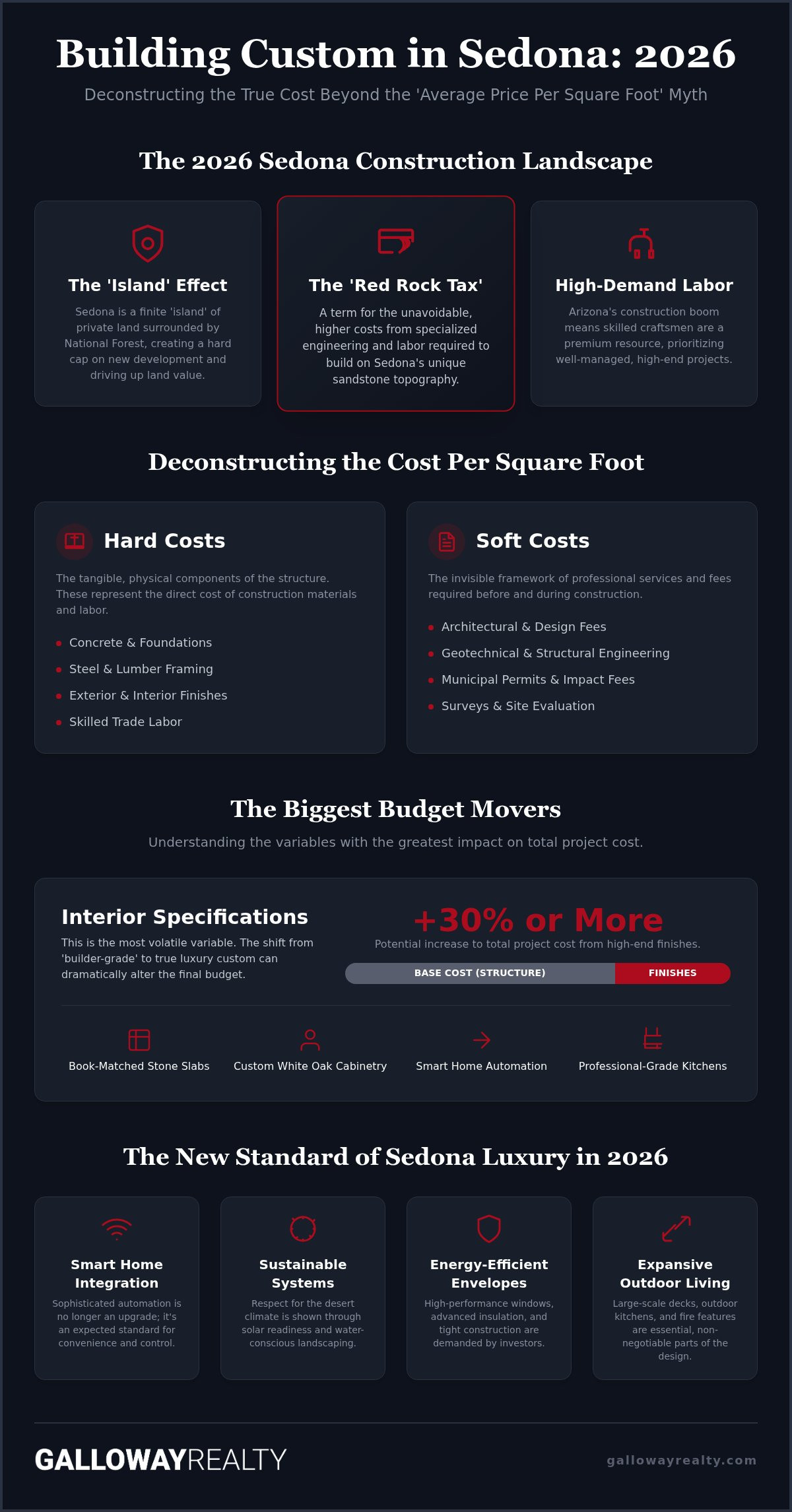
Sedona's 2026 market is defined by a paradox of high demand and a physical ceiling on growth. Standard metrics often lose their utility when evaluating the choice of building vs buying a home in Sedona . While a U.S. construction industry overview might highlight general inflationary trends, it rarely accounts for the geotechnical complexities of the Mogollon Rim. National averages fail here because they don't include the "Red Rock Tax," a term describing the specialized engineering and labor required to anchor a luxury structure into ancient sandstone.
Labor markets in 2026 continue to challenge standard project timelines. Arizona's ongoing construction boom means skilled craftsmen are in high demand, prioritizing projects that offer professional management and clear architectural vision. Success in this environment requires an assertive approach to project scheduling and a deep bench of local subcontractor relationships. This ensures that your vision moves forward while others remain stalled in the planning phase.
The 'Island' Effect: How Geography Constraints Supply
Sedona is effectively an island of private land surrounded by a sea of National Forest. This geographical boundary creates a hard cap on new development, making land acquisition a strategic chess move rather than a simple transaction. As developable acreage dwindles, the focus has shifted toward sophisticated infill projects and the redevelopment of existing estates. This scarcity is a primary driver of the total project cost. When you analyze the decision of building vs buying a home in Sedona , you must account for the reality that prime lots are no longer just found; they're curated through expert brokerage and technical site evaluation.
Defining Luxury Custom Standards in 2026
The distinction between a high-end spec home and a true custom build lies in the level of intentionality. In 2026, luxury is defined by "smart home" integration and sustainable systems that respect the high-desert climate. High-net-worth investors now demand energy-efficient envelopes and solar readiness as standard features rather than upgrades. Developments like Sky Ridge Estates set the benchmark for this new era of construction. Luxury custom is a fusion of architectural intent and site integration. It's a process that moves beyond "builder-grade" finishes to create a legacy property that feels like a natural extension of the red rock vistas.
Deconstructing the Cost Per Square Foot: Hard vs. Soft Costs
Understanding the anatomy of a custom home budget requires a clear distinction between the tangible structure and the invisible professional framework. Hard costs represent the physical reality of your investment: the concrete, steel, lumber, and skilled labor that form the skeleton of your estate. In the high desert, these costs are influenced by 2026 supply chain stabilizations and the local demand for specialized craftsmen. When evaluating the choice of building vs buying a home in Sedona , investors must recognize that the "shell" of the home is only the beginning of the financial narrative.
Soft costs are the intellectual and regulatory prerequisites that allow a project to break ground. These include architectural fees, structural engineering, and municipal permits. In Sedona, where the terrain is complex and the building codes are stringent, these fees are not merely administrative hurdles; they're essential investments in the longevity and legality of your property. Budgeting for expansive exterior living spaces is also non-negotiable. Large-scale decks, outdoor kitchens, and integrated fire features are essential for the Sedona lifestyle, often requiring the same level of structural precision as the primary residence.
The Weight of Interior Specifications
Interior specifications are the most volatile variable in the construction equation. While the structural shell of a home has a relatively predictable cost basis, the finishes can swing the total project price by 30% or more. Premium materials such as book-matched stone slabs, custom white oak cabinetry, and artisanal lighting fixtures move a project from "builder-grade" to a true luxury custom standard. In 2026, high-net-worth individuals are also prioritizing sophisticated smart home automation and professional-grade kitchen suites, which require early integration into the electrical and mechanical plans to avoid costly mid-build adjustments.
Engineering and Professional Fees
Sedona's unique geology demands a higher level of professional oversight than most Arizona markets. Structural engineering is a critical soft cost, as desert-specific foundations must often be pinned directly into the red rock or designed to mitigate the movement of expansive soils. Navigating the 2026 permit landscape requires a deep understanding of local jurisdiction. Reviewing the Sedona Development Impact Fee Schedule is a prerequisite for any serious developer, as these fees contribute significantly to the initial capital requirement.
The complexity of Yavapai and Coconino County regulations means that hiring a firm with a "one-stop-shop" philosophy is often the most efficient path forward. If you're ready to move beyond estimates and begin the process of site-specific design, you can reach out to our specialized team for a professional consultation on your project's feasibility.
Geographical Variables: The 'Red Rock' Tax on Construction
Sedona’s geological profile is a masterpiece of nature, yet it presents a masterclass in engineering challenges for the custom home developer. The "Red Rock Tax" isn't a formal levy; it's the inevitable financial premium associated with mastering the high desert's terrain. Excavation in this region often involves more than just moving soil. Builders frequently encounter solid sandstone and volcanic basalt that require hydraulic hammers or precision blasting to create a stable building pad. This level of site preparation is a primary reason why the math of building vs buying a home in Sedona can feel so lopsided to those accustomed to flat-land development.
Building on the Edge: Sloped Lot Engineering
Hillside estates represent the pinnacle of Sedona luxury, offering views that are simply unmatched. However, building on sloped lots in Sedona demands a sophisticated approach to structural support. Steep grades require tiered foundations, massive retaining walls, and complex drainage systems to manage monsoon runoff. While these elements increase the labor intensity of the project, they are essential for "engineering the view" and creating the dramatic, cantilevered profiles that define the most prestigious local residences.
Sedona's Strict Building Codes and HOA Regulations
Aesthetics in Sedona are protected by rigorous municipal and neighborhood standards. Compliance is mandatory. Adhering to the International Dark Sky Association ordinances requires specific outdoor lighting fixtures and shielded bulbs to preserve the night vista. Most luxury developments also have active Homeowners Association (HOA) design review boards. These committees enforce strict rules regarding building heights, roof pitches, and the use of "natural" exterior colors that blend seamlessly with the surrounding cliffs. Navigating these layers of oversight requires a partner who understands the local landscape and can advocate for your architectural vision while maintaining compliance.
The Strategic Advantage of Site Selection
Acquiring the perfect parcel of land is the most critical pivot point in your development journey. In the nuanced debate of building vs buying a home in Sedona , the land itself often dictates the feasibility of the entire project. You should never close escrow on a lot without a comprehensive builder's evaluation. A site that appears pristine to the untrained eye may harbor geotechnical complexities or restrictive easements that could inflate your foundation costs. By engaging a professional with a "full-lifecycle" perspective early, you identify these variables before they become liabilities.
Mastering luxury home site selection in Sedona involves more than just finding a stunning vista. You must balance the desire for panoramic Red Rock views with the necessity of long-term privacy. As developable land becomes increasingly scarce in 2026, understanding view corridors is essential. This means projecting how future neighboring structures might impact your sightlines. A strategic site selection ensures that your architectural vision remains unobstructed for decades to come.
Evaluating Infrastructure Readiness
Infrastructure availability is a primary driver of soft costs in the high desert. For remote or undeveloped lots, the choice between septic systems and municipal sewer connections can have significant fiscal implications. You must also verify water rights and the potential depth required for well-drilling, as these factors vary wildly across Sedona's diverse micro-climates. High-speed internet and reliable power are no longer optional luxuries; they are fundamental requirements for the modern luxury estate. Ensuring these services are either present or extendable is a prerequisite for any serious investment.
Exclusive Opportunities: Sky Ridge Estates
For those seeking to eliminate the traditional uncertainties of site development, master-planned luxury communities offer a streamlined alternative. Luxury lots at Sky Ridge Estates represent the gold standard for infrastructure readiness. These sites are pre-vetted for engineering feasibility, with guaranteed view corridors and established utility connections already in place. This level of preparation allows you to focus on the artisanal creation of your home rather than the technical hurdles of land preparation. If you're ready to secure a premier building site with unmatched clarity, you can contact our brokerage team to schedule a private site tour.
The Integrated Approach: Building Your Red Rock Legacy
The decision of building vs buying a home in Sedona often culminates in the realization that a unified strategy is the only way to manage high-desert complexity. Traditional construction models frequently separate the architect from the builder, creating a fragmented workflow that invites miscommunication and delays. Choosing a design-build model provides a streamlined alternative. This integrated approach ensures that every aesthetic choice is grounded in technical feasibility, effectively mitigating "change order" fatigue through comprehensive upfront planning.
Leveraging a broker-builder’s market insight is a strategic advantage for those concerned with long-term asset performance. A partner who understands both the transaction and the physical creation can guide you toward design choices that maximize future resale value. This dual perspective allows you to navigate the Buying vs. Building in Sedona debate with data-driven confidence. It’s about more than just square footage; it’s about creating a legacy property that stands as a dominant force in the local market.
Maximizing ROI Through Architectural Integrity
Resale value in Sedona is driven by architectural integrity rather than fleeting trends. Timeless design beats "trendy" every time in this luxury market. A home that "belongs" to its natural environment, utilizing local stone, organic textures, and site-specific orientations, maintains its prestige long after modern fads have faded. Integrated services prevent budget overruns during the design phase by ensuring that your architectural vision is continuously audited against current material and labor costs. This artisanal precision ensures that your investment remains as solid as the red rocks themselves.
Your Next Steps: From Vision to Reality
Transforming a vision into a physical estate is a sophisticated undertaking that requires patience and professional mastery. You should prepare for a 12-24 month journey, a timeline that accounts for the meticulous permitting, engineering, and artisanal craftsmanship required in Sedona. The process begins with a professional evaluation of your build-readiness and a deep dive into your specific lifestyle requirements. If you're ready to move from cautious inquiry to definitive action, you can Contact Galloway Realty to schedule an initial consultation. Our team is ready to help you navigate the choice of building vs buying a home in Sedona with unmatched expertise.
Secure Your Future in the Red Rocks
Mastering the Sedona market requires a move beyond surface-level math toward a deep understanding of geological and regulatory reality. The "average" price per square foot is merely a baseline, dictated by the specialized engineering of the "Red Rock Tax" and the extreme scarcity of developable land. Whether you're weighing the merits of building vs buying a home in Sedona , the most successful investors prioritize site-specific evaluation and an integrated approach to design.
Galloway Realty provides a sophisticated, "one-stop-shop" brokerage and construction service that removes the friction from traditional development. We offer unmatched expertise in Sedona's unique high-desert terrain and act as the exclusive builder for the prestigious Sky Ridge Estates. Our seamless model ensures your investment is protected from the initial land acquisition to the final artisanal creation. This is the gold standard for those who value time, precision, and architectural integrity.
It's time to transform your vision into a tangible legacy. Start Your Custom Build Journey with Galloway Realty today and begin the process of crafting your high-desert masterpiece. We're ready to lead the way.
Frequently Asked Questions
What is the average time it takes to build a custom home in Sedona in 2026?
A custom build in Sedona typically requires a 12 to 24 month commitment from the initial design phase to the final walkthrough. This comprehensive timeline accounts for the 12 to 20 weeks necessary for pre-design site review and municipal permitting. Challenging terrain and the high demand for skilled labor in 2026 can extend these periods. Expert management is vital to navigate the rigorous architectural and HOA review phases without unnecessary delays.
Are building costs higher in Sedona than in Phoenix or Scottsdale?
Construction costs in Sedona are consistently higher than in the Phoenix or Scottsdale metropolitan areas. This premium is driven by the "Red Rock Tax," which includes specialized engineering for rocky terrain and higher logistical costs for material transport. Additionally, strict municipal codes and dark-sky ordinances often require premium finishes that remain optional in other Arizona markets. These factors are essential considerations when evaluating the choice of building vs buying a home in Sedona.
Does the 'price per square foot' usually include the cost of the land?
The price per square foot quoted by custom builders almost always refers to vertical construction costs and excludes land acquisition. Land in Sedona is a separate and significant capital requirement that varies based on view corridors and infrastructure readiness. Investors should also budget for site-specific soft costs, such as geotechnical reports and land surveys, which are not typically included in a builder's base estimate. Professional brokerage can help you identify lots with lower hidden preparation costs.
What are 'impact fees' and how do they affect my Sedona build budget?
Development impact fees are one-time charges levied by the City of Sedona to fund the infrastructure required by new growth. These fees saw significant updates in 2025, with costs for a standard 1,500 square-foot unit rising to reflect the increased burden on local services. You must account for these non-negotiable expenses early in your budgeting process to avoid capital shortfalls. They represent a critical component of the "soft costs" in any modern high-desert project.
Can I build a guesthouse or ADU on my Sedona property?
Building an Accessory Dwelling Unit (ADU) or guesthouse is possible but depends entirely on your lot's zoning and Homeowners Association (HOA) regulations. The City of Sedona enforces specific size and height restrictions for secondary structures to maintain the area's neighborhood character. Additionally, many luxury HOAs prohibit detached guesthouses to preserve density standards. It's vital to have a professional review your specific deed restrictions before planning any additional living space on your Sedona property.
How do I find a builder who specializes in difficult, rocky terrain?
Seek a builder with a documented legacy of successful projects on sloped or sandstone-heavy sites. A specialized builder should provide a portfolio featuring tiered foundations and complex retaining wall systems. In Sedona, you need a partner who understands the geotechnical nuances of the Mogollon Rim. Choosing a "one-stop-shop" firm that handles both brokerage and construction ensures your lot is vetted for technical buildability before you commit to the purchase.
Is it cheaper to buy an existing home and remodel it in Sedona?
Remodeling an existing home can offer a lower entry price, but it often introduces hidden costs that rival new construction. Older homes in Sedona may require extensive structural updates to meet 2026 energy-efficiency standards or modern luxury expectations. When comparing building vs buying a home in Sedona, many investors find that a custom build offers superior long-term value. It eliminates the technical debt and architectural compromises inherent in a pre-owned property.
What is the difference between a 'fixed-price' and 'cost-plus' contract?
A fixed-price contract sets a total cost for the project based on defined specifications, placing the risk of material price swings on the builder. Conversely, a cost-plus contract involves paying the actual construction costs plus a set percentage fee for the builder's management. In the 2026 market, many luxury builders prefer cost-plus arrangements for highly customized estates. This model allows for flexibility when artisanal finishes and site complexities make a single fixed number difficult to guarantee.
